Session 5 · ERQI Global Virtual Risk Summit
Where the manifesto meets the control model
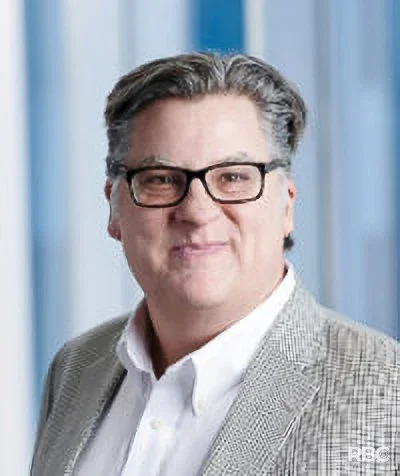
Ayoub Fandi & Andrew Shea
Overview
In this session, Ayoub Fandi, one of the creators of the GRC Engineering Manifesto, and Andrew Shea tested where engineering practice and risk quantification reinforce each other. Fandi's argument is that governance, risk and compliance (GRC) should be driven by risk rather than the audit cycle, and that controls should be measured in small, testable pieces instead of maturity levels. His closing prediction was that quantification will outlast GRC engineering itself.
Session 5 recording, ERQI Global Virtual Risk Summit 2026
Where the movement started
Fandi explained that the manifesto (grc.engineering) grew out of practitioners at B2B SaaS companies who found GRC practiced very differently from the engineering organizations around them. Their working definition is applying software engineering principles, including user-centered design, science and math, to governance, risk and compliance problems. He was candid that quantification was part of the early discussion but not central to it, though the group agreed that risk, not compliance, is the key driver. Shifting GRC left is about timing. Audits, control testing and evidence collection happen after the work is done, so the function reports on a program it had no hand in shaping. He also pushed back on the idea that GRC professionals must write code. Understanding your company's stack well enough to ask the right question counts as technical.
The two did not agree on everything. Shea has long argued for treating GRC as cost of goods sold. Fandi liked the idea but noted that every support function makes the same claim, and said GRC should earn that standing by proving its value. On outcomes versus outputs, he used the risk register. A quarterly review of top risks is an output. An outcome asks why the business carries each risk and how reducing it helps the business make money. The same logic applies to vendors. Teams that cannot say where their crown jewels are tend to ask everyone for a SOC 2 report.
Controls, AI and a hot take
Control effectiveness drew the most detail. Shea pointed to FAIR-CAM and its notion of control variance, and described an organization told to raise its NIST CSF 2.0 Govern score from 2.7 to 3.1, with funding attached. Fandi prefers atomizing a control into binary checks over assigning maturity levels. On AI, he separated reasoning, where answers are always plausible, from building deterministic checks, and described AI governance as leadership intent translated into action, driven by risk appetite. Asked whether GRC engineers will absorb quantification within 10 years, he said the engineering mindset will stay but its motions will largely be automated, while quantification is how a program should be driven. He put it bluntly: "CRQ would kill GRC engineering."
“CRQ would kill GRC engineering.”
Ayoub Fandi, on whether cyber risk quantification will outlast GRC engineering
Key takeaways
1
Start with risk, not the audit
Fandi argued that controls and certifications should be justified by the risks they mitigate. Automating controls that exist only because an auditor asked for them carries a high opportunity cost.
Watch at 44:052
Measure control effectiveness in small, testable pieces
Fandi described breaking a web application firewall control into about 15 binary checks. Risk-weighting those checks lets the result read as six of 15, which is more objective than a maturity label.
Watch at 33:023
Track the controls that move
His metrics include failure rate, how quickly failures are detected, how critical the failing scope is, remediation velocity and exceptions. Tracking a control that is always on, he said, is ego boosting.
Watch at 38:064
Treat third-party risk as first-party risk
Knowing your own critical assets tells you what to ask vendors. Fandi suggested focusing on small vendors that are critical to you, where a contract can require specific controls, rather than seeking telemetry that hyperscalers will not share.
Watch at 15:355
Use AI to build deterministic checks
Rather than asking a model whether storage buckets are encrypted, have it build an API call that checks them the same way every time. Save model reasoning for unstructured data, and keep human judgment where it is needed.
Watch at 47:12