How do you get a risk analysis to change a board's decision in ten minutes?
Session 9 · ERQI Global Virtual Risk Summit
Communicating risk so it changes a decision
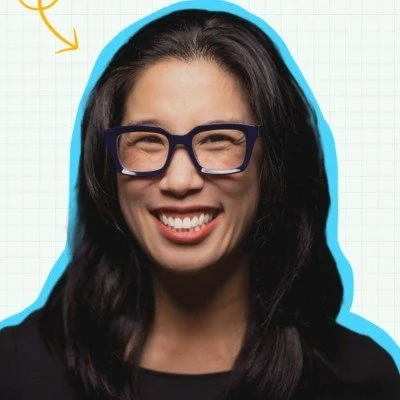
Caroline Wong & Andrew Shea
Overview
A strong risk analysis only matters if the person making the decision understands it and trusts it. Caroline Wong and Andrew Shea argue that this depends less on the analysis than on the communicator: curiosity about the audience, respect for their expertise, honesty about uncertainty, and work done well before the meeting starts.
Session 9 recording, ERQI Global Virtual Risk Summit 2026
Start from common ground
Wong opens with the people. Risk decisions are made by humans, so the work is communicating with them. She names curiosity and empathy as the starting points, and later adds respect. The risk professional and the executive both want to reduce risk, and saying so out loud gives the conversation a shared goal. Trust, in her view, comes down to one habit: "we do what we say and we say what we do."
She objects to practitioners who say they must "dumb this down" for the board. Each side is an expert in something, and the task is to explain your expertise so a non-expert can follow it. Shea frames this as translation, and Wong agrees with a caution. Talking to a CFO in dollars only works if you understand the numbers the way finance does, because people who work in dollars are precise.
Make the numbers earn trust
Shea stresses stating assumptions and being able to explain quickly how a figure was built. Wong adds that precision should match accuracy: "50 million dollars" is better than a figure with false precision attached. Shea warns against collapsing an estimate into a single loss number because it is easy to digest, since uncertainty is the subject matter. Wong's summary: "Don't present a number, present a range, explain your assumptions." The same discipline applies to volume. Analysts who maintain a top 20 of scenarios feel pressure to present all of them. Wong asks what decision you need the listener to make, then builds the ten minutes, or 600 seconds, around that. Backup slides are fine. Three hundred slides for a ten-minute slot is not.
Do the work before the meeting
Shea cites advice he heard at an NACD event that executives should not first hear from you in the meeting itself. Wong calls this "the meeting before the meeting": share a summary a week ahead, speak with attendees, and ask the decision-maker what it would take for the answer to be yes. She extends this to a leader's chief of staff, assistant, and direct reports, whom she describes as trusted voices. For a public company, the investor relations page and the 10-K show how it makes money and what its targets are, and Wong notes that company performance shapes risk tolerance. AI tools can summarize a filing or rehearse a presentation with a simulated listener, with care about what data goes into public models.
On harder moments, Wong sees a spectrum between full quantitative analysis and a heat map, and suggests connecting the two ends. When someone challenges the numbers, she suggests asking curiously why they see it differently, or taking it offline. Shea notes that advising on risk and recommending an action can be a gray area, but Wong says you should arrive with a recommendation.
“Don't present a number, present a range, explain your assumptions.”
Caroline Wong, on making the numbers earn trust
Key takeaways
1
Lead with curiosity, empathy, and respect
Find the shared goal of reducing risk, and treat the audience's expertise as equal to yours.
Watch at 3:222
Know the business
Learn how the organization makes money, its current targets, and how performance affects risk tolerance before speaking in dollars.
Watch at 21:063
Show ranges and assumptions
Avoid single-point loss figures and false precision, and explain how the numbers were built.
Watch at 17:224
Hold the meeting before the meeting
Socialize material in advance, including with the people who advise the decision-maker.
Watch at 26:045
Bring a recommendation
Even when the risk owner decides, arrive with an opinion backed by quantitative and qualitative measures.
Watch at 49:32